


As a product leader for over two decades, I’ve seen firsthand how the way we delegate work can make or break both teams and products. Let me share something personal: some of my proudest moments haven’t been about what I’ve built, but rather watching employees transform when given the freedom to pursue goals instead of just completing tasks.
Why Goals Beat Tasks Every Time
Think about the last time someone handed you a detailed list of tasks versus when they shared an exciting goal and trusted you to achieve it. Different feeling, right?
When we give people tasks, we’re essentially saying “I’ve already figured out the best way to do this – just follow my instructions.” But when we share goals, we’re saying “I trust your judgment, creativity, and expertise to find the best path forward.”
The Magic of Responsibility
I’ve had numerous employees specifically request to work on my teams over the years. The reason? Not because I’m particularly brilliant, but because they knew they would get real responsibility and ownership over their work. It’s amazing to watch people bloom when given the chance to make meaningful decisions.
Here’s what happens when you shift to goal-oriented leadership:
- Engagement Soars When people understand the ‘why’ behind their work and can shape the ‘how’, they bring their whole selves to the challenge. They’re not just doing tasks – they’re solving problems they care about.
- Better Decisions Emerge Time and again, I’ve seen teams come up with solutions far better than what any leader could have prescribed. Why? Because they’re closest to the work and have the deepest understanding of the practical challenges.
- Innovation Flourishes Good ideas can come from anywhere in the organization. Instead of suggesting an “ideas mailbox” that nobody reads, goal-oriented leadership creates natural pathways for innovation to bubble up and be implemented.
- Leaders Get Strategic Here’s a benefit many miss: when leaders stop being approval bottlenecks for day-to-day decisions, they can finally focus on strategic work. The organization becomes faster, more agile, and better aligned.
- Knowledge Stays Want to keep your best people? Give them meaningful goals to pursue. I’ve consistently seen higher retention when people feel trusted and empowered to make real decisions.
The Virtuous Cycle
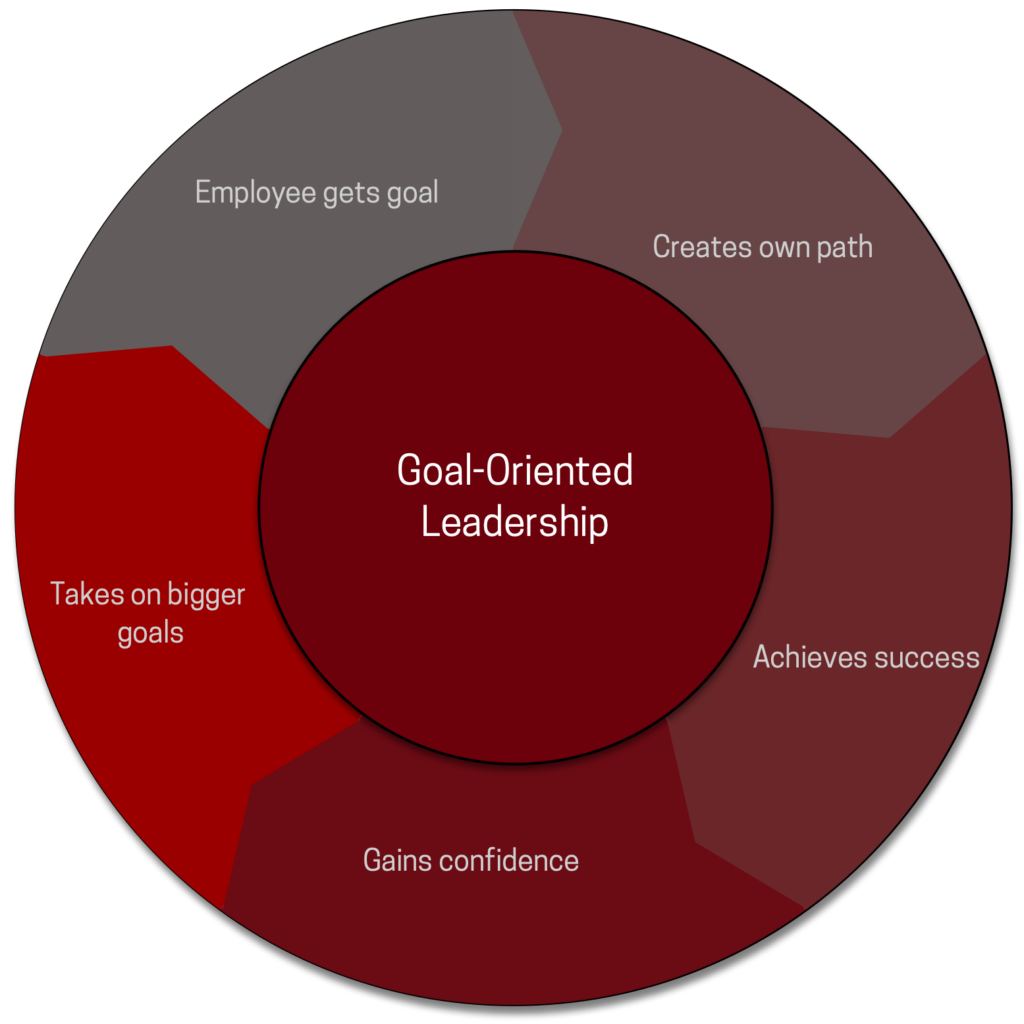
The beautiful thing about goal-oriented leadership is how it creates a positive feedback loop:
- Success breeds confidence
- Confidence leads to more initiative
- Initiative drives innovation
- Innovation creates more success
The Power of Outcome-Based Squads
This principle of goal-oriented leadership is actually a cornerstone of the Outcome-Based Product Operating Model I advocate for. When we structure product squads around outcomes rather than features or tasks, we see this philosophy in action at scale.
Each squad gets clear Key Results (the measurable goals in OKRs) that align with business objectives, but they maintain autonomy in how to achieve these results. This creates several powerful effects:
- Squads naturally prioritize work that moves their metrics
- Solutions emerge from deep customer and problem understanding
- Cross-functional collaboration happens organically
- Teams stay focused on value delivery instead of feature completion
- Innovation flows from outcome ownership
I’ve seen squads achieve remarkable results when given clear outcomes instead of prescribed solutions. They often find faster, simpler ways to reach goals that nobody at the leadership level had considered. This is the magic of combining clear direction with execution autonomy.
Making the Shift
If you’re a leader, start small. Take one project or area and instead of defining how it should be done, clearly articulate what needs to be achieved and why. Then step back. Support your team, but resist the urge to prescribe solutions.
Yes, there will be mistakes. But here’s the truth: the cost of those mistakes is far less than the cost of disengagement, lost innovation, and talent departure that comes from micromanagement.
A Challenge Worth Taking
Moving from task-based to goal-oriented leadership isn’t just about efficiency – it’s about creating an environment where people can do their best work and feel proud of their contributions. It’s about building organizations that can adapt and innovate because everyone, at every level, is thinking and contributing.
I’ve seen quiet team members become vocal contributors, junior employees grow into impressive leaders, and struggling projects turn around – all because people were given goals to pursue instead of tasks to complete.
Leave a Reply